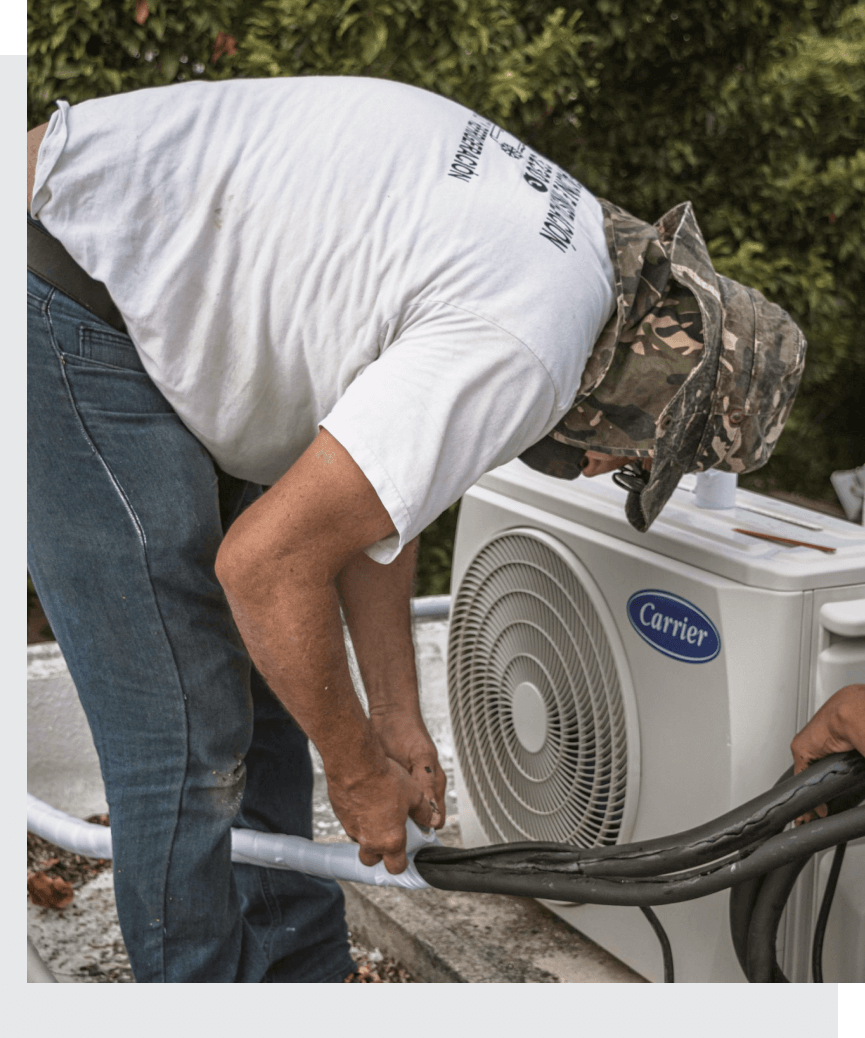
we help the customer to
Find and Choosing the Right HVAC Contractor
- Servicing
- Repairs
- Installation
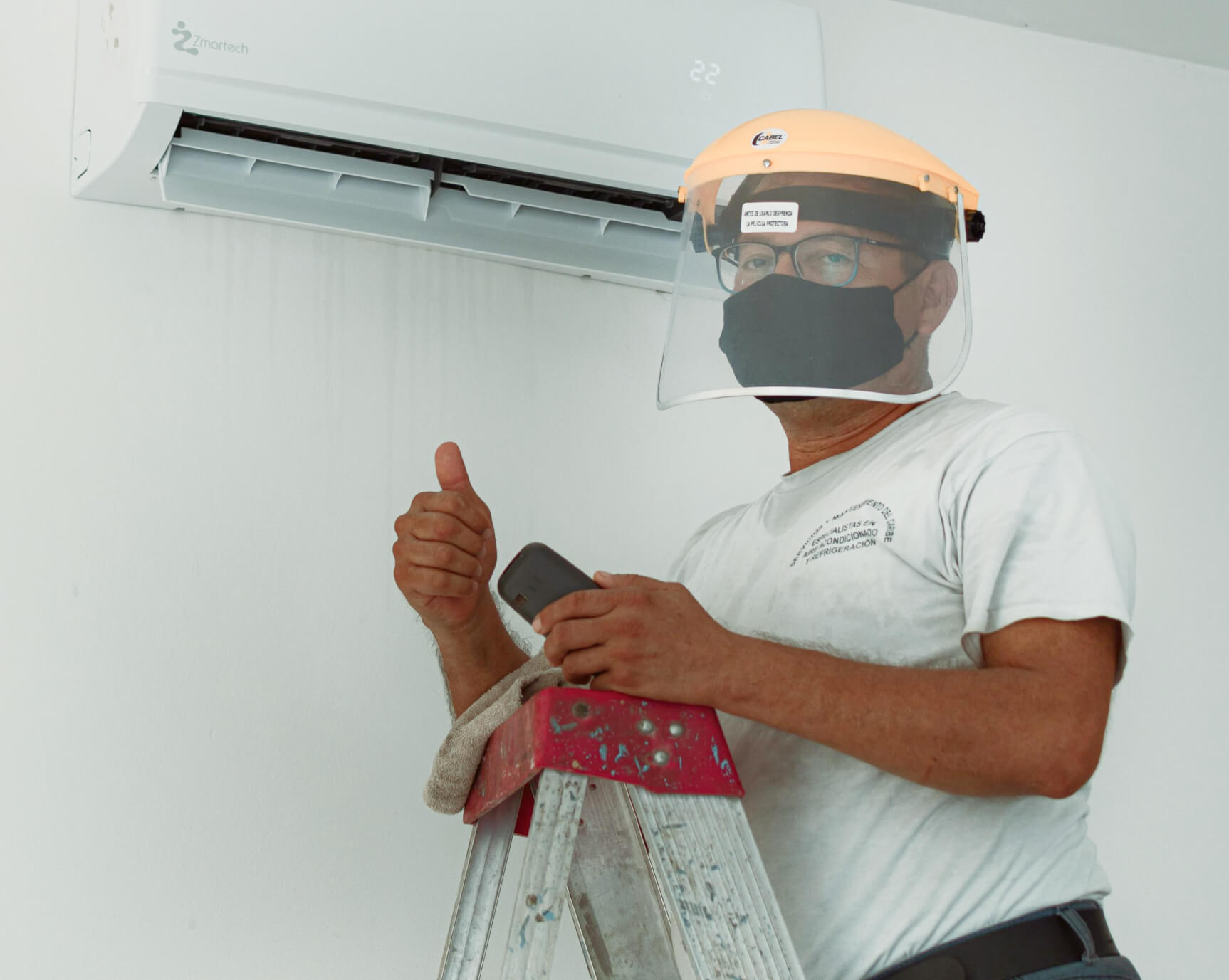
|
we help the customer to Find and Choosing best Service provider Company to repair, service and installation of any HVAC equipment including furnace, air conditioner, water heater, humidifier, water treatment systems and more.
We help the customer to Find the best HVAC professionals at your doorstep.
Review & Guidelines - FREE CALL SERVICE!





Where comfort meets efficiency! We take pride in being a leading relationship builder agency between customer and provider of heating, ventilation, and air conditioning (HVAC) solutions for residential, commercial, and industrial clients. Our team of dedicated professionals is committed to delivering top-notch services, indoor environment remains comfortable.
Our Mission
Our mission is to create comfortable, healthy, and energy-efficient spaces for our valued customers. We strive to enhance your quality of life by Finding reliable HVAC services tailored to your specific needs. Whether it's installing cutting-edge HVAC systems, conducting routine maintenance, or providing swift repairs, we are your trusted partner.
Having a reliable and efficient HVAC system is essential for maintaining a comfortable home environment. Whether you’re in need of a quick repair, routine maintenance, duct system cleaning, or a new HVAC installation, picking the right HVAC contractor can really make all the difference.
So, how do you choose a good HVAC contractor to oversee your home comfort project?
Selecting the right HVAC company is crucial. Here are some factors you need to think over before partnering with one moving forward:
Verify that the company that is providing HVAC job, along with their technicians, has the necessary licenses and certifications. A valid license proves that a technician’s education level makes them qualified to work on HVAC systems and fulfill industry requirements.
Look for a company that has a strong track record and a wealth of knowledge. A skilled expert has a higher probability of managing various system complexities and carrying out troubleshooting successfully.
Check to see if the HVAC company is adequately insured. Insurance protects you from responsibility in the event that your HVAC system is damaged or suffers a malfunction due to the actions of a technician.
Ask relatives, close friends, or neighbours who have hired an HVAC for work about their experiences. You can also find reviews from previous homeowners online.
Obtain written, detailed quotations from different HVAC companies. To understand the scope of work, expenses, and any extra costs, compare quotes before choosing an HVAC company for the job.
Find out if the HVAC company offers emergency services. Knowing you have a reliable contact in case of an urgent issue can provide peace of mind and ensure the repair happens in a timely manner. Not only prevent further damage from occurring to your current system, but it also means you can get back to enjoying a comfortable interior in no time.
Lucky for you, searching for HVAC companies in your area is easier than ever. Here are some ways you can narrow down your online search:
Look through internet directories like Better Business Bureau (BBB). You can evaluate the standing of HVAC providers in your neighbourhood with sites like these. You can also search local trade organizations and their websites for further information as well.
Ask family members, friends, or co workers who have used HVAC services and had good experiences for referrals. Personal recommendations can offer valuable insight into how these companies conduct their daily business.
Conduct a simple online search using search engines like Google. Explore their websites for more information and online reviews from past clients who have worked with different local companies in your area.
When evaluating HVAC companies and potential contractors, be sure to consider factors such as job experience, licensing, warranty information, reviews from past customers, and the range of services offered. If you’re still unsure about who to choose, don’t hesitate to reach out to individual companies directly to speak with their staff.
Yes, HVAC companies should always be willing and able to provide credentials to demonstrate their qualifications and compliance with industry standards. These credentials serve as a form of assurance to customers that the company is qualified, licensed, and operates professionally. So, what credentials should you be on the lookout for? Let’s take a closer look below:
HVAC companies have to have a current provincial or municipal license. A license guarantees that the business meets the requirements and has the skills that are required to perform professional work.
In order to safeguard the company and their customers, HVAC companies must obtain insurance. This usually consists of liability insurance, which covers any damages that might happen throughout the project, meaning you won’t be held responsible for any costs that may result from a technician’s errors.
Industry-specific certifications indicate that the company has undergone additional training and testing in specific areas of HVAC expertise. While certifications are not always mandatory, they can demonstrate a promise of professionalism and ongoing education.
Companies with credibility will recognize the value of openness and are usually happy to provide the documentation required to give customers peace of mind. If a business is reluctant or unable to offer credentials, this could be a red flag that they are not being honest with you.
Yes, asking for references before hiring an HVAC company for the job is always good practice. By contacting their references, you can learn more about previous customers’ experiences with the business and use that information to help you make an informed decision on whether or not to hire them for your project. So:
Ask for a number of recently completed references and projects that are comparable to the one you are looking to have completed,
Find out if the person who provided the reference is satisfied with the work that was done.
Listen to your gut. If you notice red flags throughout your initial experience with a company and don’t feel 100% confident in their ability to oversee your HVAC project, look into other options.
Remember, feeling comfortable with the potential HVAC contractor you choose to perform services on your heating and cooling system is essential. Therefore, to ensure you settle on a good contractor and receive an excellent job result, here is a closer look at other questions you may want to consider asking a contractor before they work on the HVAC system in your home:
Ask them to outline the scope of the job they will be performing on your HVAC equipment. A technician from any good company with extensive experience in the heating and cooling industry should be able to outline the scope of the HVAC service they will be performing in your home.
Homeowners may also want to consider asking the HVAC contractor they hire what the timeline will be for your HVAC service. This can give you a better idea about what day you should book your service and make any arrangements to your daily schedule.
Whether you’re having new HVAC equipment installed, annual maintenance, a home evaluation measuring your indoor air quality, or an HVAC repair, homeowners should aim to ask their chosen HVAC contractors whether there is anything they need to do to prepare their home for the upcoming appointment.
This could include things like cleaning the area around your HVAC system, removing any obstacles to and from your equipment, and moving any valuables away from the work site to ensure no damage occurs to your personal belongings.
Choosing an HVAC contractor is tough work. But when you choose to hire the professional and experienced HVAC team from Heating and Air Conditioning:
If you want a new HVAC system installed in your home, Heating and Air Conditioning is pleased to offer an extensive list of ENERGY STAR certified units that optimize your energy efficiency ratings.
When you choose to work with us as your HVAC contractor, homeowners will receive a complimentary home evaluation. During this comprehensive home evaluation, a home comfort advisor will calculate your home’s heating and cooling needs before determining whether your current equipment is keeping up with your home comfort needs.
As a licensed HVAC contractor, Heating and Air Conditioning knows that all homeowners and homes are different. This is why we’re willing to work closely with you before customizing your experience with us.
Because we’re confident in your ability to provide top tier HVAC solutions to homeowners, we are pleased to offer a 2-year warranty to repair, replace, or refund you, should you be unsatisfied with your experience.
Expert installation, routine maintenance, and 24/7 emergency repairs for steam and hot water boiler systems.
Full-service solutions for centralized systems, ensuring consistent and efficient heat distribution throughout your home.
Proper sizing and expert installation of high-efficiency furnaces to deliver reliable warmth and energy savings.
Prompt furnace repair for all makes and models, with around-the-clock emergency service when you need it most.
Installation and upkeep of year-round heat pump systems that handle both heating and cooling with ease.
Precision installation of properly sized air conditioning units designed to deliver energy-efficient cooling during Hamilton’s summer heat.
In-depth air conditioning inspections to catch issues early and help avoid costly breakdowns.
Fast, dependable repairs for air conditioners of any make or model—available with emergency response.
Installation and service of dual-function heat pumps that provide effective summer cooling and winter heating.
Setup and maintenance of UV air purifiers that integrate with your HVAC system to help reduce indoor pollutants.
Installation and service of whole-home humidifier systems to help maintain balanced indoor humidity levels year-round.
Professional ductwork cleaning to eliminate dust, allergens, and buildup for cleaner air and improved system efficiency.
Professional repair services for all models and types of water heaters to restore reliable hot water quickly.
Expert installation of new water heater systems, including removal of old units and setup of energy-efficient replacements tailored to your home’s needs.
Professional installation and repair of faucets and other fixtures throughout your home.
24/7 emergency plumbing support to address urgent issues before they cause major damage.
Full drain maintenance to keep water flowing freely and prevent clogs or backups.
Replacement of outdated Kitec plumbing systems with safe, modern piping solutions.
Reliable plumbing repair services for everything from leaky pipes to serious water line problems.
Installation and repair of bathroom, kitchen, and laundry sinks with expert precision.
Sump pump services for Hamilton homes, including installation, inspection, and emergency repair to help prevent basement flooding.
Quick, efficient toilet installation and repair services with minimal disruption to your home.
Whole-home water filtration and treatment systems to boost water quality and protect your plumbing.
Powerful hydro-jetting technology used to clear away tough clogs and restore smooth plumbing system function.
Advanced basement waterproofing and structural foundation repair to prevent water intrusion and protect your home’s integrity.
Effective waterproofing systems are designed to block water at the exterior foundation level.
Professional maintenance is the most practical way to protect your HVAC investment and help safeguard it against unexpected breakdowns. Here’s how it can benefit you:
Reason 1: Enhanced System Performance
Regular maintenance helps your HVAC system run more efficiently by preventing problems before they arise. Just like a car needs tune-ups, cleaning and inspecting your HVAC keeps it functioning smoothly.
Routine checks can resolve issues like clogged air filters (reducing airflow), dirty coils (affecting heat transfer), and low refrigerant levels (leading to decreased cooling power).
Reason 2: Extended Equipment Lifespan
Regular maintenance catches small issues before they snowball into major problems. Think of it like catching a cavity early—a quick fix versus a root canal later! By addressing minor wear and tear, you prevent premature breakdowns and significantly extend the life of your HVAC unit.
Studies show that properly maintained HVAC systems can last 10-15 years, while neglected units might only function efficiently for 5-7 years. That’s almost double the lifespan with some TLC!
Reason 3: Improved Indoor Air Quality
Regular maintenance directly improves indoor air quality. Tasks like changing air filters capture dust, pollen, and other allergens before they circulate throughout your home. Additionally, duct cleaning removes built-up debris that can harbor mold and bacteria.
By removing these contaminants, you breathe cleaner air, reducing allergy and asthma symptoms. Clean indoor air is especially beneficial for residents with respiratory problems or sensitivities, allowing them to breathe easier and experience fewer allergy flare-ups.
Reason 4: Lower Energy Bills
Just like a well-tuned engine, a clean and inspected system uses less energy to achieve the same comfort level. According to the U.S. Department of Energy (DOE), a simple task such as changing the air filter on your HVAC system can improve efficiency by up to 15 percent.
Homeowners can help improve efficiency by following these simple tasks:
Reason 5: Prevention of Costly Repairs and Emergencies
Regular maintenance acts like a preventative health check for your HVAC system. Here’s how it catches minor problems before they snowball:
Preventive maintenance costs are a fraction of the price compared to emergency repairs. It’s a wise investment to catch minor issues early and avoid the hassle and expense of emergency repairs.
If your heating, ventilation, and air conditioning (HVAC) system is making odd noises, emitting strange odors, or failing to keep temperatures consistent, it’s not just an inconvenience; it’s a warning sign.
Whether you manage a data center or a downtown office building, catching issues early can save thousands in energy and emergency repair costs.
When the actual temperature in a room doesn’t match what the thermostat displays, you’ve likely got a calibration problem or worse. Faulty sensors, outdated thermostats, or poor placement (too close to vents or windows) can all throw off readings and cause the HVAC to run when it shouldn’t.
Even a 2-3°F inaccuracy in a large building can spike heating or cooling costs by up to 10%. Comfort complaints follow quickly, and your system racks up unnecessary wear trying to hit an unreachable setpoint.1
If your system never seems to shut off, or it can’t quite hit the set temperature, something’s off. Dirty coils, clogged filters, malfunctioning sensors, or an undersized unit could be the culprit. Any of these makes your HVAC work overtime, and the utility bills show it.
According to the Department of Energy (DOE), poor HVAC maintenance can drive energy use up 5-20% each year. That’s a budget-busting problem in large commercial facilities.2
What needs to happen:
Start with the basics:replace filters, clean coils, and make sure the system is appropriately sized for the space. Schedule regular tune-ups to catch minor issues before they create major energy waste.
When staff or tenants say the air feels stale, muggy, or too dry, that’s a red flag. High humidity can cause mold risk, while low humidity leads to dry air and static—both signs of failing dehumidification or ventilation problems.
Beyond discomfort, poor indoor air quality (IAQ) affects productivity and satisfaction, and it can lead to bigger tenant retention issues over time.
What needs to happen:
Replace filters regularly and assess your ventilation and humidity control components. Track complaints to spot patterns and prioritize adjustments that protect occupant health and comfort.
When your HVAC starts producing strange smells,it’s time to pay attention. Musty odors may point to mold or mildew in the ducts or drip pans. A burning smell could signal an electrical issue. And any chemical or sweet scent might indicate a refrigerant leak, which is an environmental and safety concern.3
The International Facility Management Association (IFMA) lists odor complaints as one of the top drivers of tenant dissatisfaction. Ignoring the source doesn’t just risk occupant complaints; it may also create health hazards or system damage.
What needs to happen:
Investigate and resolve odor complaints immediately.Schedule a professional inspection to check duct work, drain pans, and electrical components. Mold and refrigerant leaks require a swift, specialized response.
If some rooms are freezing while others feel like a sauna, airflow is likely to blame.Blocked vents, dirty filters, broken dampers, or aging fans can all disruptcirculation. And when airflow is uneven, your system must work harder to maintain setpoints, leading to higher wear and energy waste.
Inconsistent airflow is also one of the most common reasons for tenant discomfort and maintenance calls.
What needs to happen:
Audit your system for blockages and mechanical failures. Ensure ducts are clear and properly sealed, fans are operational, and dampers are balanced. Include airflow checks in routine maintenance plans.
A low hum is normal. Grinding, screeching, banging, or squealing? Not so much. These sounds often indicate loose belts, failing motors, or compressor trouble. Ifleft unaddressed, these small issues can lead to full mechanical failure or shutdown.
Proactive maintenance can catch these problems early, saving thousands in repairs and preventing costly emergency downtime.
What needs to happen:
Don’t wait for the noise to go away. Schedule a technician to inspect the system, tighten any loose components, and assess whether parts need replacement. Early fixes are always cheaper.
Energy use should be consistent year-over-year, accounting for seasonal demand. If your utility bills are rising and there’s no change in occupancy or space usage,your HVAC system could be losing efficiency.
Dirty coils, aging motors, or outdated controls can slowly degrade performance and inflate your monthly costs.
What needs to happen:
Benchmark energy use against past data. If you see unexplained increases, inspect your HVAC system. Clean components, optimize controls, and consider a tune-up or retrofit for older equipment.
Short cycling (when the system turns on and off frequently without completing a full cycle) can overheat components, strain compressors, and dramatically reduce system lifespan. It also leads to poor temperature control and higher energy consumption.
Causes range from refrigerant issues and faulty sensors to improper system sizing or control failures.
What needs to happen:
If short cycling occurs, have a technician run diagnostics. They'll check for pressure imbalances, control errors, or equipment that is undersized/oversized. Early intervention can prevent a complete system failure.
If you’ve recently added walls, rearranged open office spaces, or made significant floor plan changes, your HVAC system may no longer be optimized for the new layout. Poor airflow, hot spots, or over cooling can all result.
Your system was designed for a specific load and configuration. When the building changes, airflow and ventilation strategies should, too.
What needs to happen:
After significant layout changes, schedule a system assessment. Technicians can re-balance airflow,adjust vent placement, and evaluate if zoning or equipment changes are needed to match the new floor plan.
A “run-to-fail” approach might seem cost-effective—until it isn’t. Deferred maintenance can lead to catastrophic failures, long lead times on parts, and unhappy building occupants.
What needs to happen:
Shift from reactive to preventive maintenance. Set a regular inspection schedule and partner with a facility services provider who can monitor system health, catch early warning signs, and help plan lifecycle upgrades.
Ventilation describes the movement of air into or out of homes and proper ventilation is a key component of good indoor air quality. Ventilation can help improve indoor air quality by removing pollutants from the home and by bringing in fresh air from outside. This is especially important when renovating or when using chemical products in the home.
Get quick and reliable maintenance services for your home and office with our expert.
We provide expert HVAC Free consulting Links with energy-efficient, cost-effective, and sustainable solutions.
There is a $0.00 Service Fee for Checking
Friendly customer service is treating customers with empathy and going the extra mile to meet their needs.